AI Data Center Construction and the SF Bay-Delta Region: Potential Local Impacts and Signs of Resistance
This second post in a three-part CRBA series on AI data centers examines the rapid expansion of AI data centers in the SF Bay-Delta region and what it means for global warming, environmental justice, and for local residents.
Find out where development is expanding, how projects move through local and state approval processes, and how residents and policymakers are beginning to push back. From electricity and water demands to pollution, utility costs, and community benefits, the choices being made one project at a time could have consequences far beyond individual city limits.
By Keith Nickolaus, PhD, CRBA Writers Team
“Developers have requested 18.7 gigawatts of service capacity for data centers, more than enough to serve every household in the state, according to the California Energy Commission.”
— “Big tech blocks California data center rules,” Cal Matters
“Californians pay the second-highest utility prices in the country, and rates are expected to soar even higher because of the rapid growth of data centers around the state.”
— California State Senator Jerry McNerney

Equinix Data Center (2026), San Jose, California
Courtesy of Equinix and wiki-media commons
Overview
In the first post in this series, Why We Need AI Data Center Moratoriums Now: A Global Warming and Environmental Justice Perspective, we took a close look at how the projected multi-trillion dollar AI data center build out is likely to worsen global warming and burden ordinary residents — with higher utility rates, potential power shortages, and with noise and air pollution for those living closer to large data centers.
The take away was clear enough: allowing construction to race ahead of clean-energy capacity and proper environmental assessments could lock in greater fossil-fuel use among many other impacts — local, national, and global — and represent a big step backwards for efforts to slow global warming and promote greater environmental justice.
These impacts often result from local decisions — decisions that determine the fate of one AI data center project at a time — decisions typically governed by local state, county, and municipal permitting policies, and hearings and approvals related to utility regulations, land use, and zoning.
What makes our greater SF Bay–Delta region stand out in the race to build data centers is, of course, the concentration of big tech companies and incubators in San Francisco and Silicon Valley.
But large data centers don’t just need capital and a specialized work force. While often designed to resemble professional office buildings on the outside, many will development proposals entail industrial and manufacturing-like facilities — with large footprints, high electricity and water demands, noise concerns, and the potential for air pollutants from the use of on-site industrial-scale power generation.
Right now, because AI innovation and adoption is creating urgent demand for far more compute power, big tech and AI data center developers are racing to build much larger, if not massive, data centers.
These hyper-scale data centers typically require lots of land, multi-level construction, and staggering amounts of water and electricity.
In the greater SF Bay-Delta Region, development pressure is now spreading beyond Silicon Valley toward industrial areas, agricultural edges, Delta communities, and the Sacramento-area growth corridor.
For local residents, four realities deserve attention:
The regional buildout is moving quickly, while many proposed projects remain difficult for the public to identify and track.
Local permitting decisions can have statewide consequences, affecting electricity demand, grid infrastructure, water systems, climate goals, and utility costs.
Residents are asking harder questions about who benefits from data center development—and who bears the environmental and economic costs.
Some Bay Area localities have already taken action — modeling what’s possible for how local residents and communities can protect their interests and enforce more responsible approaches and community benefits.
As U.S. Representative Zoe Lofgren, whose district includes part of Silicon Valley, put it:
Communities should not have to make decisions about whether to host a data center without access to basic information about electricity usage, water consumption, air quality, noise pollution, and the potential effect on energy prices.
We all deserve to have information like this available to us in a timely fashion — not after major development decisions are made.
This is why the Climate Reality Project and our local chapter, Climate Reality Bay Area (CRBA), are calling for widespread mobilization to demand immediate AI data center moratoriums.
The Current Pace of the Regional Data Center Buildout Across the SF-Bay Delta Region

The greater SF Bay–Delta region is already a major center of digital infrastructure, and now development pressure is spreading beyond Silicon Valley toward industrial land, warehouse districts, agricultural edges, Delta communities, and the Sacramento-area growth corridor.
Patrick Nouhailler — Silicon Valley from above (wikimedia_commons)
One great resource for tracking data center activity — from early permit applications through initial phases of construction — is online at Erin Brockovich’s AI Data Center reporting website. The site includes an interactive map of known data center activity while also tracking community-sourced reports about potential or suspected data center proposals.
To track AI data center activity closer to home, Cleanview’s California Data Center Project Map tracks planned and operating California facilities, providing additional information on data center activity in the SF Bay-Delta Region, including a convenient discovery and tracking tool. For final verification, data provided there can be checked against city, county, utility, and CEQA records.
Based on our current research, we are highlighting 9 data center developments across 6 local SF Bay–Delta Region municipalities — currently seeking permits, being permitted, or which have already broken ground for construction.
Hayward – One Data Center
The STACK data center approved by the Hayward planning commission will reportedly be 100 feet tall (exceeding the standard 75-foot limit) and cover over 300,000 square feet. The facility would also include 28 backup generators, an on-site power substation, and a switching station.
Santa Clara - Two Data Centers
Santa Clara is the region’s established hub, with a dense concentration of existing facilities. Currently, there’s a proposal for construction of an additional three sites.
The ECL CSC-1 FlexGrid AI Data Center will reportedly use a modular design and be powered with multiple power sources, including on-grid electricity from PG&E, hydrogen power, and natural gas.
CoreSite, owned by American Tower, is reportedly planning to develop a 72-MW data center on a 5-acre campus that will be powered by SVP (Silicon Valley Power).
San Jose — Two Data Centers
In San Jose, Prologis, a warehouse and logistics company, has initial San Jose City Council approval to build a STEM data center in North San Jose on a 159-acre city-owned parcel to be powered with electricity from PG&E.
Prologis is also seeking approval for the build-out of a 516 square-foot data center in South San Jose. Both will reportedly be powered by grid electricity supplied by PG&E.
Pittsburg — One Data Center
The City of Pittsburg has reportedly permitted a redevelopment plan that will turn the City’s former 76-acre Delta View Golf Course into a technology park, with a 3-phase build out. Phase 1 is the ~300,000 sq. ft. Perseus Data Center. The developer, AVAIO Digital, reports that power delivery is anchored by a long-term agreement with Pittsburg Power Company offering low-cost power. The campus is designed to scale in multiple 99MW phases, offering long-term expansion capability beyond the initial Phase 1 deployment.
Gilroy — One Data Center
Further south in Gilroy — a farming community about 50 miles east of Santa Cruz — Amazon Web Services has broken ground on a 56-acre data center. Phase one build out is reported to consist of a single-story 218,000 sq ft data center building connected to 49MW from PG&E.
Sacramento — Two Data Centers
In Sacramento, Prime Data Centers has engaged a contractor to build two data centers on a 8.6 acre parcel on unincorporated land adjacent to Sacramento, with plans for the data centers to be powered by SMUD (Sacramento Municipal Utility District).
In many cases, developers are looking for some combination of:
Large parcels of land
High-voltage transmission access and nearby substations
Fiber connectivity
Lower-cost industrial property outside the urban core
Access to water or wastewater systems
Local jurisdictions are able to process permits and development applications
The exact number of active proposals is difficult to state with confidence.
Other research conducted for this article suggests the nine data center projects listed above is likely to be a conservative number. San Jose’s Department of Building and Planning website lists 3 data centers currently approved for construction and nine additional data center applications under current review.
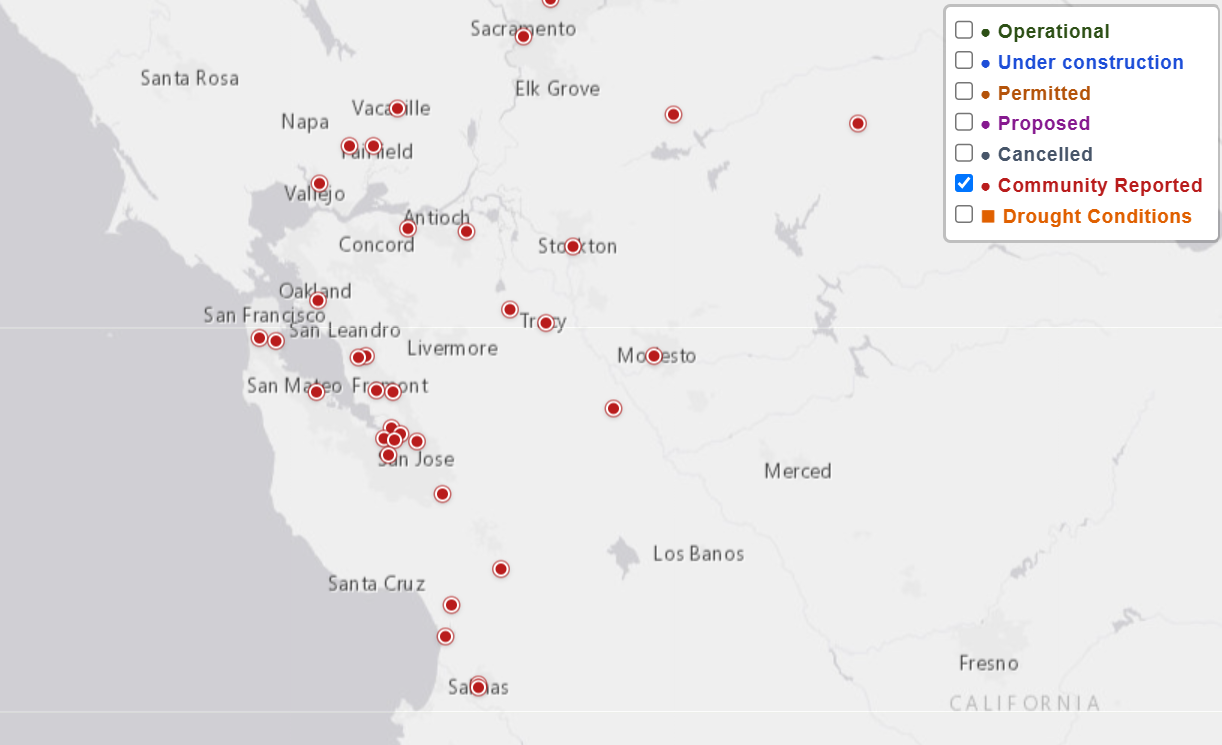
The interactive map at the Brockovich Data Center Reporting website also shows possible data center activity or permitting applications based on information sourced from local residents.
These community-sourced reports constitute some 20 or more additional sites across the larger SF Bay–Delta Region reported by residents as locations for potential data center construction.
Projects may be described as data centers, cloud campuses, “advanced-computing” facilities, industrial parks, utility upgrades, or associated power infrastructure. Some may still be early-stage land-use proposals. Others may involve expansions within existing campuses that receive relatively little public attention.
That makes early public tracking especially important.
Depending on its size and design, a data center development will often require:
Major new electricity demand
Cooling equipment
Backup generators
New substations or transmission infrastructure
Water and wastewater connections
Construction traffic and road improvements
Security lighting and industrial noise
Why Local Decisions About Data Center Development Have Statewide (and Global) Stakes
For all these reasons Bay Area residents will likely want to know: Is my someone going to develop a large data center where I live?
But this local focus is only a small part of a bigger story…
As we highlighted in Part 1 of this series: It’s about how many data centers will be built across the country and with what kinds of regulatory provisions for resource availability, for ensuring power generation is fueled by clean, renewable sources—not fossil fuels—for monitoring and limiting adverse impacts related to clean air, and to protect green spaces and biodiversity.
Perhaps most urgent of all is ensuring we quickly get the right policies and adequate power generation and grid capacity in place. It’s important we keep this bigger buildout picture in mind: the pending expansion of data center capacity is projected to be enormous — on a scale that will drive significant increases in carbon emissions. This will be consequential for global warming — with impacts for everyone everywhere, regardless of where you live and whether you have a data center in your backyard or not.
We must not let big tech turn back the clock on the urgent race to cut greenhouse gases and slow global warming.
This is why CRBA and the Climate Reality Project are advocating for immediate moratoriums on data center permitting and construction.
And, we should not be fooled by appeals to economic competition — the idea that there’s some critical race to build more data centers or risk losing AI dominance is simply propaganda. Why? Because the U.S. already has a huge data center advantage — home to roughly 10x as many data centers as its biggest economic rival China.
So don’t be fooled. There is no compelling economic rationale for letting developers and big tech interests push through development projects without proper regulatory inquiry and planning, and without time for public input and oversight.
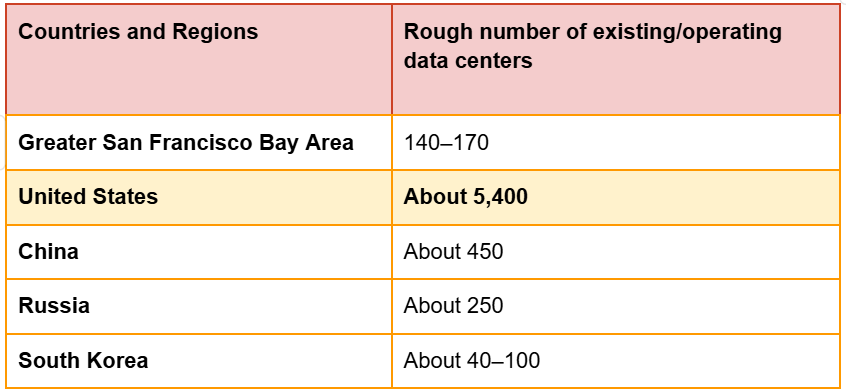
Why is big tech racing to build out data centers when the U.S. is already far and away leading the world in compute capacity?
Paradoxically, while data centers may be built to serve global technology companies and have global consequences in terms of greenhouse gas emissions, it’s still the case that many of the decisions that enable new data centers and that determine how they’ll be powered are likely to made locally. To change the equation would require statewide or nationwide moratoriums and progressive, high-level energy policy action.
Many of the decisions that enable new data centers and that determine how they’ll be powered are likely to made locally. To change the equation would require statewide or nationwide moratoriums and progressive, high-level energy policy action.
As things stand, it falls largely on local legislative bodies to influence and enforce zoning rules, land-use designations, conditional-use permits, development agreements, water and sewer connections, environmental review, and infrastructure and power requirements, bodies such as:
city councils
county boards of supervisors
planning commissions
planning departments
water districts
local utilities
However, state law and state agencies sometimes shape the process — through energy planning and, in certain circumstances, energy-generation permitting; CEQA findings; and statewide building and environmental standards:
California Energy Commission: The CEC incorporates data-center load into statewide electricity planning and, for some projects, has authority to permit — or exempt — power generation components associated with on-site power generation. CEC environmental reviews can inform later discretionary decisions by local and state agencies.
California Environmental Quality Act (CEQA): CEQA generally applies when a public agency must make a discretionary approval for a proposed project likely to cause a significant environmental impact. Various levels of review include: a categorical exemption, an initial study and negative declaration/mitigated negative declaration, or a fuller environmental impact report (EIR). For data centers, CEQA review provisions are often triggered by components such as electricity and grid infrastructure, water and wastewater demand, emergency-generator air emissions, noise, construction traffic, greenhouse-gas emissions, and cumulative effects.
This all matters because when it comes to large data centers, we are not talking about everyday kinds of commercial investments, like developing a business park or office building.
For example, large-load data-center projects are often flagged for CEC environmental review where backup-power-generator configurations — often involving the use of diesel-powered generators — trigger that process.
AI data centers come with operational and infrastructure features that resemble manufacturing plants and impose wide-ranging social costs, such as significant impacts on resource use, on grid capacity, electricity rates, air quality, and quality of life for those living in the vicinity of these developments.
A large data center facility may require:
New grid infrastructure
Transmission and substation upgrades
Lots of additional electricity generation
Water-system capacity
Road improvements
Emergency-response services
Other investments that could potentially affect utility customers or taxpayers
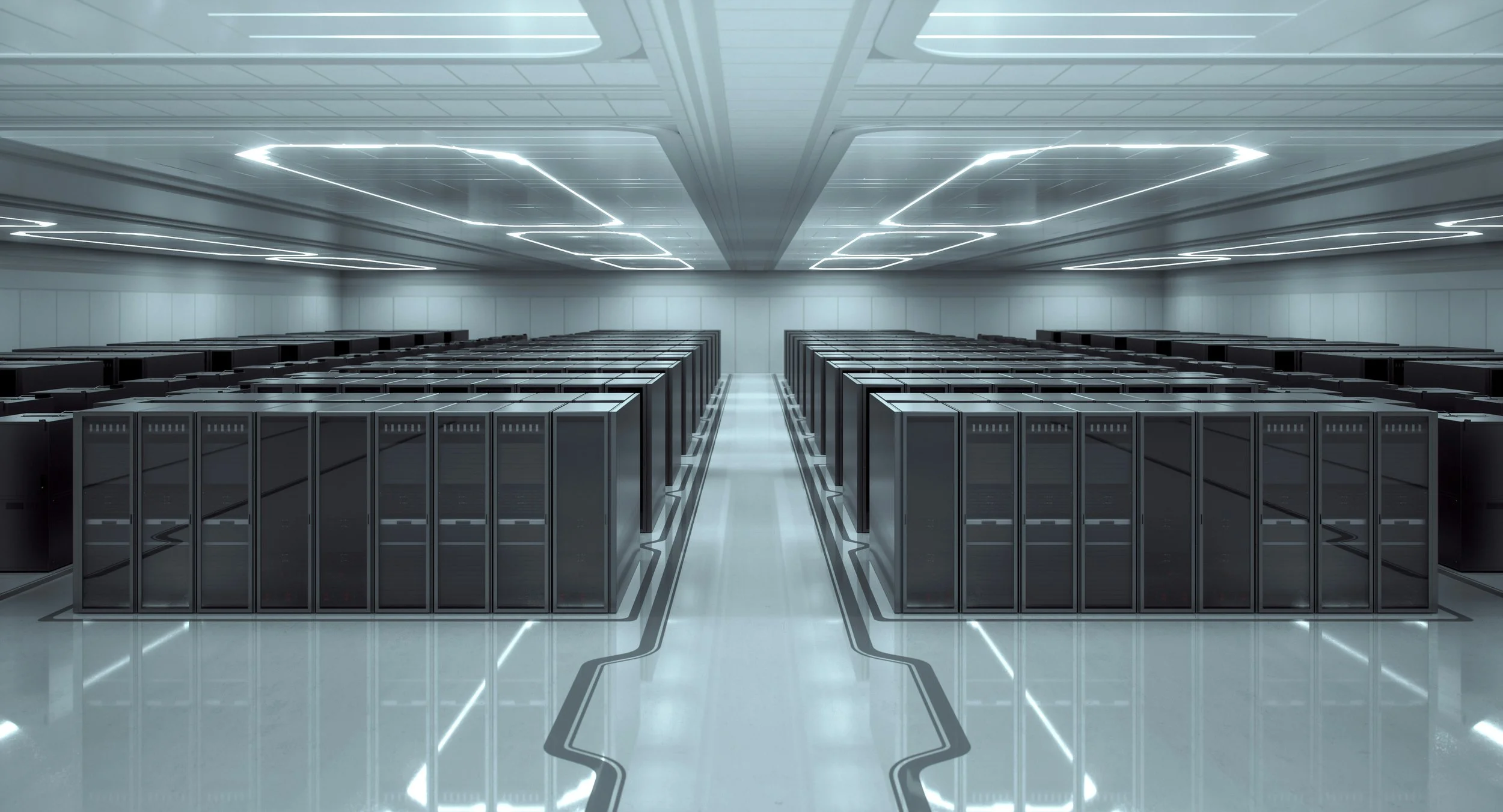
A multi-trillion-dollar wave of AI data center construction will happen one data center permitting approval at a time…
Planning decision made in one city will often have ramifications for California’s broader clean-energy transition. The cumulative impacts on land use and resource allocations will ripple across California — and beyond, including global impacts from the intensified global warming driven by significant increases in fossil fuel-powered electricity generation.
Water scarcity
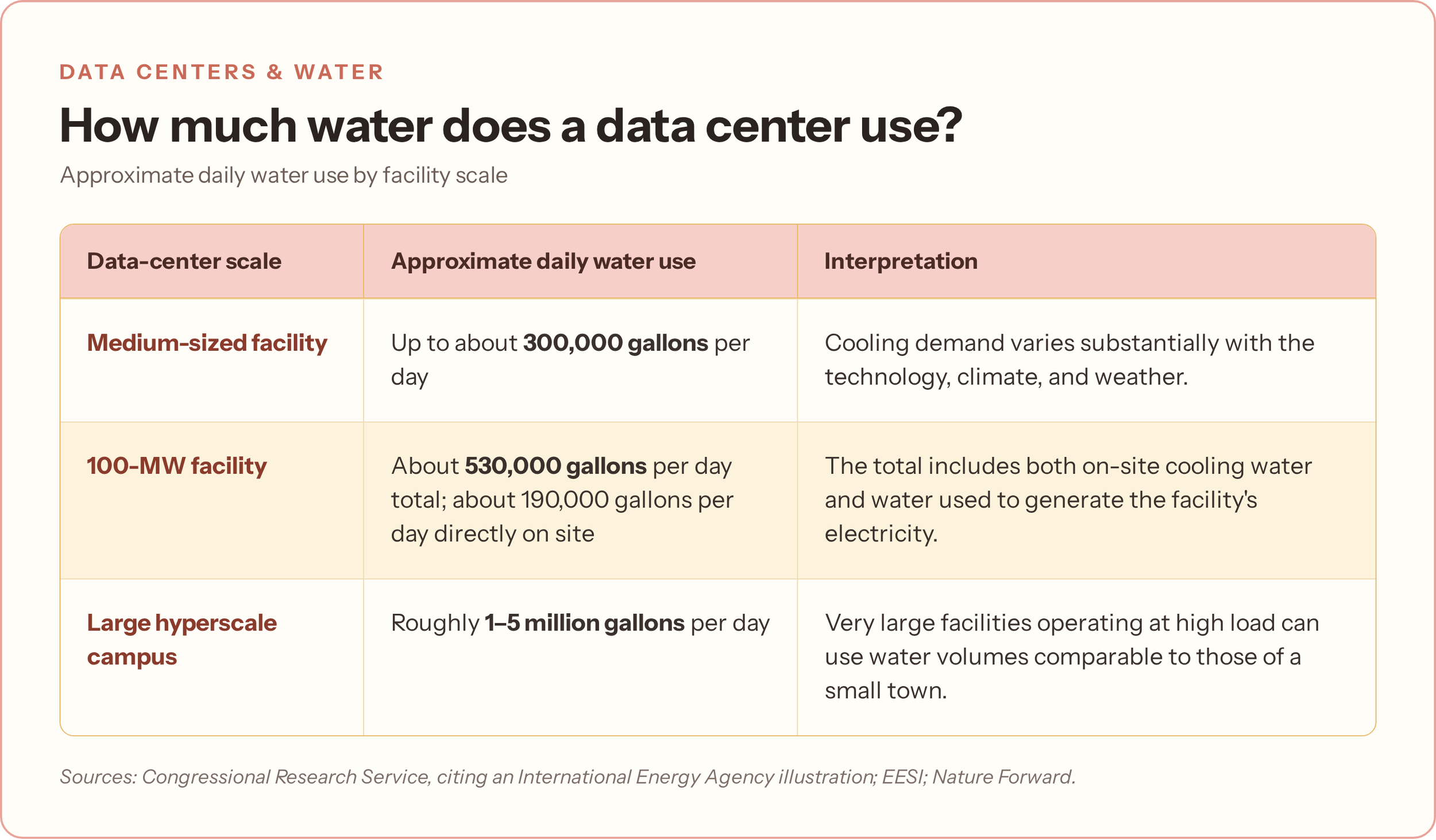
If permitted without responsible planning and regulation will compete for valuable and often diminishing water supplies — with larger facilities swallowing up what can be millions of gallons of water each day, even in areas where water is crucial for agricultural production.
More global warming
Without advance planning that ensures strong standards that will ensure the spiking electricity demand will be met using clean and sustainable sources of electricity generation — and not fossil-fuel powered electricity generation — the massive projected proliferation of new and larger data centers will offset our urgent and already inadequate progress toward reducing the greenhouse gas emissions fueling global warming and that will be trapped in our atmosphere for many decades to come.
The sad fact is, there’s little doubt that the electricity demand increases will result in utility monopolies like PG&E and SMUD increasing production of fossil-fuel-generated electricity. As Hayward Planning Commissioner Robert Stevens conceded to reporters when commenting on the proposed Hayward STACK Infrastructure data center development: "It's laughable to think that this is going to be supported by any type of renewable energy."
Putting profits-at-all-cost before the planet
Many of the data center permit applications — approved or under review — include requests to include dozens of on-site fossil-fuel powered generators for backup power, but with little information about how many will be operational and for how many hours during each yearly cycle, or what this means in terms of more and more carbon dioxide emissions entering the atmosphere when we need to be doing much more to reduce these emissions in order to mitigate global warming.
Strained electrical grids and stressed utility customers
Another big question is what will happen as these vast numbers and sometimes mega-sized data centers come on line over the next few years. Will the electricity these plants pull from local utility grids lead to power shortages or outages or to additional electricity rate increases for ordinary rate payers?
“The sheer amount of energy requested by data centers in California is prompting questions about costly grid upgrades even as speculative projects and fast-shifting AI loads make long-term planning uncertain. Developers have requested 18.7 gigawatts of service capacity for data centers, more than enough to serve every household in the state, according to the California Energy Commission.”
— “Big tech blocks California data center rules,” Cal Matters
Local residents also have an important role under environmental review and public permitting processes. Communities can watch for project applications, planning commission hearings, environmental documents, utility proceedings, and public-comment opportunities before major approvals are finalized.
Whether or not a facility might produce local tax revenue or construction jobs isn’t the whole story. It’s also whether the project’s full public cost is understood—and who will bear those costs, and for how long.
Case Studies: How AI Data Center Projects Get Local Approval (or Get Put on Hold)
Data centers may be built to serve global technology companies, but the decisions that enable them are often made locally. City councils, county boards of supervisors, planning commissions, planning departments, water districts, and local utilities can influence zoning, land-use designations, conditional-use permits, development agreements, water and sewer connections, traffic mitigations, and environmental review.
This matters because a project can appear to be a simple private real-estate development while also creating public obligations: new grid infrastructure, transmission and substation upgrades, water-system capacity, road improvements, emergency-response needs, and possible ratepayer impacts. The question is not simply whether a facility creates local tax revenue or temporary construction jobs, but whether the project’s full public cost is understood and fairly assigned.
The Oakley Example — A Model for Resistance
The city of Oakley, in eastern Contra Costa County, provides an important regional example. After residents raised concerns about potential data center development, the city adopted a temporary pause on new data center applications while officials considered whether existing zoning and permitting rules adequately addressed electricity, water, noise, land-use, and environmental impacts.
The Hayward Example — A Cautionary Tale
There, deliberations leading up to the approvals that gave a green light to the two-storey, 300,000 square-foot STACK data center mostly got the attention of local residents after the fact — despite the fact that lots was going on in committee meetings, as has been reported by the local paper, the Hayward Herald.
According to the Hayward Herald, STACK Infrastructure negotiated a million dollar plus community benefits package in order to get the 75-foot height limit waived for their 100-foot design, but the reporting makes no mention of public input in this process.
In terms of how much money the benefits package should comprise and for what community benefits, city officials themselves seemed bewildered when it came to naming, let alone implementing, any clear decision making path and within the resulting 6-month approval time frame, there seems to have been little or no effort made to slow the process down, to inform public stakeholders and residents, nor to gather any meaningful community input.
Moreover, the whole package itself could have just as readily been jettisoned without Hayward residents having any input at all. At least one member of the Hayward Planning Commission, Commissioner Robert Stevens reportedly questioned why there should even be any community benefits package, arguing that “requiring a Public Benefits Package as a condition of project approval set a concerning precedent and that the proposed package was inflated given the project's broader regional benefits..
Also playing out in city meetings was STACK Infrastructure acknowledging on record that there was no plan whatsoever for powering the facility with clean and renewable energy:
Commissioner Ron Meyers questioned the facility's energy strategy, asking whether Stack Infrastructure would procure renewable energy directly or rely on renewable energy credits. Company representatives acknowledged they would depend on credits and lacked a contingency plan should those credits lose validity.
What happened in Hayward is hardly out of the norm, but it highlights how flawed current planning and approval requirements are when it comes to what is projected to be one of the country’s biggest ever capital expenditure projects ever, and for facilities that consume staggering amounts of natural resources — both power and water — on a daily basis.
Hayward’s case also highlights the limited processes many cities and counties have in place for ensuring equity and transparency.
When it comes to such large, resource-thirsty industrial projects, transparent impact assessments and inquiries into community costs and benefits is something we should expect (and demand) from our local governments.
When it comes to such large, resource-thirsty industrial projects, transparent impact assessments and inquiries into community costs and benefits is something we should expect (and demand) from our local governments.
Key Takeaways for Local Activism
Understanding if and why a community benefits package is called for, and for what benefits should not be left to chance or to head scratching.
It’s easy enough to ask
Who in the city will benefit? By job creation, tax revenue, and other economic benefits?
Who will bear collateral costs? Such as increases in pollution and noise, the impact of industrial-scale backup generators operating on site, and in terms of electricity rate increases, water availability and water infrastructure needs, potential energy shortages or power outages?
Is the project design adequate and optimized? Designs should include a responsible and sustainable plan ensuring electricity demands will be met with renewable energy sources, a realistic review of how water requirements match up against existing water resources and the water needs of the affected communities, and specifications that address noise mitigation and and other public health and quality of life impacts.
Does the project safeguard community interests? If the site location will result in undue impacts on health, safety, and quality of life for local residents, there should be plenty of time and opportunity for public comment so residents can counter unresponsive decision making with lawsuits and/or at the ballot box.
Weighing benefits vs. adverse impacts: Practical analyses shouldn’t be deemed beyond the scope of local governing bodies, as some Hayward officials intimated. While the process may require some time and thought, the arithmetic is basic enough: local representative and community task forces simply need to outline in rough data the commercial benefits developers are projected to reap, the benefits the larger community is poised to reap, and weigh these against the local and larger social costs and impacts, both during construction and during years of ongoing operation. This provides a transparent guide for incorporating community benefit packages — both for calculating the level of benefits and how they’ll be allocated.
The unique impacts of data center construction and operation: what city officials and local residents should assess:
Air quality and health: Emergency generators and associated power infrastructure can create local emissions, particularly during testing, outage events, or periods of grid stress.
Water and wastewater: Cooling needs vary by facility design, but large projects can require substantial water or create wastewater-management needs. In a drought-prone state, communities deserve clear, site-specific numbers.
Noise and quality of life: Cooling equipment, generator testing, construction, and industrial traffic can affect nearby homes, schools, and open space.
Affordability: Residents should ask whether developers, utilities, or ordinary ratepayers will pay for required grid, substation, transmission, and water-system upgrades.
Jobs and economic benefits: Construction employment may be substantial, but permanent operating jobs are often limited relative to a facility’s land, power, and water demands. Communities should seek transparent, enforceable local-benefit commitments.
Energy Use, Grid Capacity, Clean Energy and Sustainability: At the scale currently projected, the AI Data Center buildout is almost certain to have significant impacts on electricity demand, and which puts this kind of commercial development in a league of its own. But is there a mechanism in place for regulating local approvals that will account — transparently, accurately, and responsibly — for how the state can meet the cumulative demand? For the potential costs to ratepayers and to the state’s urgently needed reductions in greenhouse gas emissions?
The lesson is simple but important: rapid, out-of-the-spotlight approval can happen and does, as Hayward’s experience shows us, but it’s also not inevitable, as the Oakley example highlights.
The fact remains that how planning and permitting decisions happened for the STACK data center project in Hayward is too often the norm. That’s a big part of the risks involved.
But, if local permitting processes routinely unfolds this way, why should it be different now, or why does it even matter?
The problem is that when it comes to large data centers, what’s being approved can have outsized community impacts and involve outsized energy and resource demands, compared to other kinds of commercial development projects. However, local city councils and planning departments are NOT getting ahead of the curve and data center developers are moving forward at lightening speed.
“Californians pay the second-highest utility prices in the country, and rates are expected to soar even higher because of the rapid growth of data centers around the state. Data center owners and their customers should bear the high costs associated with data centers, not California ratepayers.”
— California State Senator Jerry McNerney (Democrat representing, Stockton and the Tri-Valley Region)
Los Angeles County offers an example of what “getting ahead of the curve” might look like.
Officials in the county are studying potential key revisions to its Renewable Energy Ordinance (REO). One factor they are re-assessing are the current planning and zoning requirements for the development of utility-scale renewable energy and energy storage projects.
The study conducted by the county also recommends technology-specific siting considerations and regulatory permitting tools for each county department. Separately, the Los Angeles County Board of Supervisors is also set to consider concerns about the potential health and environmental impacts of data centers, “with a possible county-wide moratorium of such developments on the table” according to reporting by the law firm Mayer Brown.
In fact, transparency is often a critical policy gap.
Communities often lack standardized, project-specific information on expected electricity demand, water consumption, backup generation, emissions, and responsibility for new grid infrastructure.
If local residents make their voices and concerns heard in order to influence and inform the often behind-the-headlines meetings and hearings that lead to permitting, planning, and building decisions, they stand a much better chance of being heard and impacting these decisions before the shovels and bulldozers start breaking ground.
The most consequential opportunities are often before an entitlement is granted: general-plan and zoning updates, permit scoping, draft environmental review, planning-commission hearings, city-council or board votes, and utility-rate or infrastructure proceedings.
Local governments can do their part too, by creating time to understand what a project requires, the impacts it will have on both local and state planning and local residents, and by creating space and forums for both informing the public and reaching out for public input before granting development rights that may be difficult to reverse.
In essence, slowing permitting and planning actions is crucial.
This is what Oakley’s city officials did, it’s what some states have done, such as New York, and it’s what the Climate Reality Project and CRBA are urging citizens to demand.
A national moratorium, as has been proposed by Senators Bernie Sanders of Vermont and U.S. Representative Ocasio-Cortez of New York, would for obvious reasons be the most expedient option of all.
Why AI Data Center Permits and Approvals in the SF Bay Region Will Often Crisscross a Patchwork of State and Local Authorities
Most front-line approval power is local. City councils, county boards of supervisors, planning commissions, planning departments, and local utility agencies often determine zoning, conditional-use permits, development agreements, water/sewer service, and CEQA review.
However, a “data center” project impacts are likely to include new transmission or substations, water and wastewater demands, backup diesel generators, noise, construction traffic, and—in some cases—dedicated power generation.
Therefore, specific project features may require approvals from discrete state or local authorities.
Local land-use authority: Cities and counties generally decide whether a data center is allowed in a location and what conditions attach to approval, often based on local zoning ordinances.
CEQA and public review: A project may require environmental review, but the depth of analysis depends on its features, local approvals, and whether an exemption is claimed. Residents should watch for notices of preparation, draft environmental impact reports, mitigated negative declarations, and public-comment deadlines.
State energy authority: The California Energy Commission does not ordinarily permit the data-center buildings themselves, but it has major responsibility for statewide energy planning and can hold direct authority over certain associated energy facilities, including large thermal generating plants.
Water and utility agencies: Water districts, wastewater agencies, electric utilities, and regional grid entities may make separate decisions that determine whether a project can operate at the scale proposed.
Infrastructure costs: Public agencies should require developers to identify expected electricity use, water demand, backup generation, emissions, and the cost of any new infrastructure before approvals are granted.
Which SF Bay–Delta Region Legislators & Bills Are Leading the Way in Calls for Accountability and Transparency?
Assemblymember Bauer-Kahan (Democrat, Orinda) is the principal author of AB 1577, the Data Center Energy Accountability Act, which promotes grid reliability by requiring data centers to report energy usage and efficiency information to the Energy Commission and local planning agencies. In addition to informing statewide energy planning and resilience, the bill would create a mechanism that helps create transparency around how much energy projects will require and what power sources are being relied on.
Democratic state senator Steve Padilla, while from San Diego (please don’t confuse with CA U.S. Senator Alex Padilla), is one of the state’s most pro-active legislators when it comes to monitoring data center construction and protecting the public interest. State Senator Padilla has sponsored several bills thus far.
SB 57 — this bill was gutted by data center lobbies but as initially drafted, according to nonpartisan reporting from Cal Matters, it would have required data centers to install large batteries to support the grid during peak demand and help ensure that utilities have a plan to meet data center energy demands with 100% carbon-free electricity by 2030, well ahead of the state’s own mandate. In its watered-down form — which passed last year — it helps to clarify and reinforce existing California Energy Commission studies and reporting for monitoring how growing electricity demands from data centers may impact grid capacity and utility rates for California residents.
SB 886 — SB 886 co-authored by State Senator Steve Padilla and Democratic State Senator Jerry McNerney (Stockton) is intended to ensure data center developers pick up the costs for new electricity transmission, generation, and grid upgrades, so these costs are not passed on to other utility customers. According to State Senator Padilla’s office, “SB 886 would require the PUC to establish a special tariff to protect ratepayers from the transmission costs that supply large data centers while meeting the state’s climate goals.”
Where It Stands: SB 886 very recently was approved by the legislature, passing the Senate in a 28-10 vote and the Assembly in a 49-7 vote. It is now awaiting Newsom’s signature to become law.
SB 887 — SB 887 would stop data center developers from taking environmental review shortcuts by eliminating their use of categorical CEQA exemptions. If enacted, the law would require data center permitting applications to undergo a full environmental review process but also provide incentives for projects certified to meet specified environmental and climate conditions, which would include measuring and mitigating greenhouse gas emissions. Thanks to the CEQA reporting steps, communities would likely have better visibility into project information and more opportunities to raise concerns and assess what kinds of impacts to expect and who would be most affected.
Where It Stands: SB 887 recently passed in both the Senate (29-8) and the Assembly (42-10) but still needs to be signed by Governor Newsom to become law.
How Can We Mobilize To Stop the Local Data Center Expansions and Create Pathways for Stronger Public Oversight?
In the Part 3 of this series (upcoming) — Saying NO to Unregulated AI Data Center Expansions: How Residents of the Greater SF Bay and Delta Regions Are Fighting Back — we’ll turn from the questions communities should be asking and look instead at the actions all of us can take.
Be sure to stay tuned. The post will explore how Bay Area and Delta residents can track proposed projects, engage local decision-makers, build coalitions, advocate for moratoriums, and demand stronger safeguards before major data center developments become a done deal.
About the author:
Keith Nickolaus, PhD is a grant professional, digital content writer, and former K-12 educator based in Berkeley. He has been a CRBA member since 2024 and a member of the Climate Reality Project Leadership Corps since 2026.