By Tracey Chaykin, award-winning artist, CRBA member, and committed environmental advocate.
You may arrive expecting to see an impressive collection of elephants. You may leave thinking a little differently about the world we share.
There are moments when the unexpected has a way of stopping us in our tracks.
For me, one of those moments arrived in downtown Livermore, California, during what I thought would be another wonderful day celebrating art and community.
As president of the San Jose chapter of the Colored Pencil Society of America (CPSA DC210), I look forward to our annual participation in Livermore's ArtWalk. It's an opportunity to share our creativity, connect with fellow artists and visitors, and introduce the community to the remarkable possibilities of colored pencil as a fine art medium.
It's also an opportunity to give back.
Each year, our chapter embraces a humanitarian project that brings our members together through art in support of a meaningful cause. This year, our Protecting the Pacific initiative celebrates Northern California's marine life and coastal habitats through original 5-by-7-inch artwork reproduced as greeting cards, with proceeds benefiting The Marine Mammal Center in Sausalito.

The participating members of the Colored Pencil Society of America San Jose chapter at the Livermore Artwalk.
What I hadn't anticipated that morning was coming face-to-face with elephants!
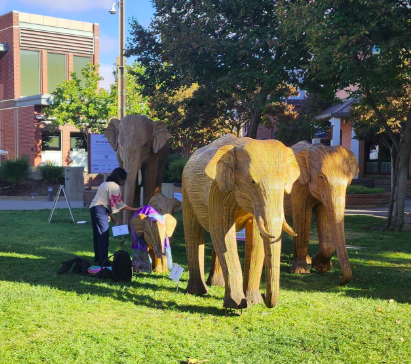
Not one, but an entire gathering of remarkably lifelike, full-size elephant sculptures standing among the trees and people in downtown Livermore.
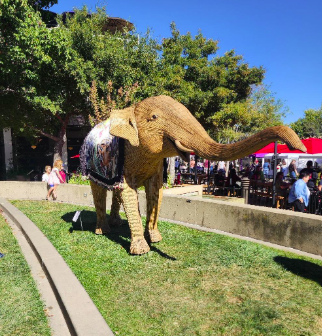
My first reaction was pure awe, quickly followed by an almost childlike excitement. Their size alone was breathtaking.
The details, the textures, the expressions — it was difficult not to feel as though I had wandered into an entirely different world.
And then I discovered that these extraordinary creations represented something far greater than an outdoor art exhibition.
They were part of The Great Elephant Migration, a remarkable international initiative connecting art, conservation, Indigenous craftsmanship, and the importance of learning to coexist with the natural world.
Suddenly, our day of sharing art had become an unexpected celebration of environmental creativity on a much grander scale.
An Extraordinary Journey with an Extraordinary Purpose
The Great Elephant Migration began with a simple yet powerful idea: What if art could help people reconsider their relationship with wildlife?
Originating in the Nilgiri Hills of southern India, the project brings together Indigenous artisans, conservationists, and creative visionaries who understand that protecting wildlife involves more than preserving individual animals. It also requires protecting habitats, supporting local communities, and finding practical ways for humans and wildlife to share the landscape.
What makes these sculptures especially meaningful is that they aren't imaginary elephants.
Each one is modeled after a real wild elephant known to the people who live alongside them. Their distinctive features, postures, and personalities are carefully recreated by the artisans of The Real Elephant Collective.
Imagine that for a moment.
These aren't simply beautiful representations of a species. They are artistic portraits of individual lives, each with its own story.
As a wildlife artist, that detail particularly resonates with me. Whenever I create a portrait of an animal, I hope to capture something beyond its physical appearance—a sense of its presence, individuality, and place in the natural world.
These artists have accomplished that on an extraordinary scale.
And they've done it using a material with its own environmental story.
These aren't simply beautiful representations of a species. They are artistic portraits of individual lives, each with its own story.
Turning an Environmental Problem into an Artistic Opportunity
One of the most fascinating aspects of The Great Elephant Migration is what the sculptures are made from.
Rather than traditional wood, stone, or metal, the elephants are handcrafted using Lantana camara, an invasive plant that has spread aggressively through parts of India's forests.
Lantana competes with native vegetation, alters habitat conditions, and can reduce food availability for wildlife. In landscapes already challenged by human development, its spread creates additional pressures on the ecosystems that elephants and countless other species depend upon.
The artisans have transformed this problematic plant into something extraordinary.
By harvesting and weaving lantana into life-size elephant sculptures, they demonstrate how a material associated with environmental degradation can become a source of artistic expression and economic opportunity.
The initiative also supports broader habitat restoration and coexistence efforts, connecting creative enterprise with practical conservation work.
I found myself particularly inspired by this approach.
As an artist who has experimented with repurposing materials in my own work, including creating paper clay from recycled shredded paper, I appreciate the ingenuity of looking at something discarded or environmentally problematic and imagining an entirely new purpose for it.
What might otherwise be viewed only as a problem becomes an opportunity to create, educate, and inspire.
And isn't that one of the most exciting possibilities of sustainable art?
What might otherwise be viewed only as a problem becomes an opportunity to create, educate, and inspire.
And isn't that one of the most exciting possibilities of sustainable art?
A Celebration of Art, Culture, and Community
The elephants arrived in Livermore as part of The Great Elephant Migration: A Family Gathering, a free public exhibition presented by Livermore Valley Arts and Three Thirty-Three Arts.
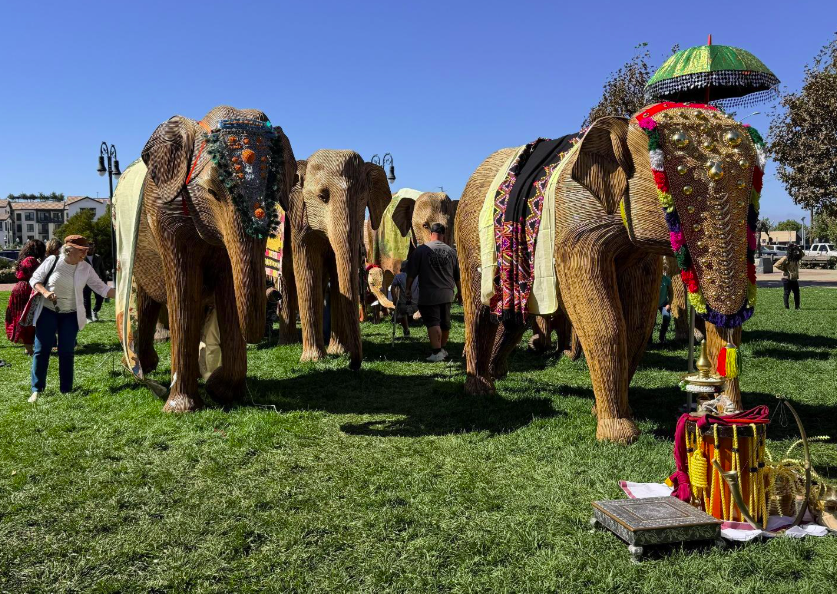
Photo taken by Livermore Mayor John Marchand of elephants at Stockmen’s park.
From October 10 through December 6, 2026, visitors can experience the sculptures at Stockmen's Park and Bankhead Plaza, where the elephants have temporarily become part of the downtown landscape.
Their arrival coincided with the 25th anniversary of Livermore's ArtWalk, bringing together two celebrations of creativity on the same day.
For our colored pencil chapter, the coincidence was especially meaningful.
We had come together to share our artwork and support marine conservation through Protecting the Pacific. Just a short distance away, another remarkable artistic endeavor was inviting visitors to consider the future of elephants and the habitats they call home.
Different artists. Different mediums. Different conservation missions.
Yet both were demonstrating the same powerful principle: art can bring people together around issues that matter.
The beautifully decorated elephants added another dimension to the experience. Their intricate textiles, vibrant colors, and ornamental details reflected the cultural and artistic traditions associated with their journey from India.
The sculptures themselves were captivating, but watching people respond to them was equally memorable.
Visitors wandered among the elephants, studied their construction, took photographs, and shared the experience with family and friends.
It was a wonderful reminder that art doesn't always need the quiet walls of a gallery to create a meaningful connection. Sometimes, placing it directly within a community allows an entirely new audience to discover its message.
Learning To Share Our World
At the heart of The Great Elephant Migration is a concept that sounds simple but presents one of conservation's greatest challenges: coexistence.
As human populations grow and communities expand, wildlife increasingly encounters roads, agricultural lands, buildings, and other barriers within landscapes animals have traveled for generations.
Elephants, in particular, require substantial space to move between feeding grounds, water sources, and suitable habitats. When those routes are disrupted, encounters between people and elephants can become dangerous for both.
The Great Elephant Migration encourages us to consider a different approach — one that recognizes wildlife not as an obstacle to human progress, but as an essential part of the living world with which we share this planet.
And although we don't have wild elephants roaming Northern California, the underlying challenge is surprisingly familiar.
From mountain lions crossing highways to deer navigating fragmented habitats, our own region faces difficult questions about development, conservation, and coexistence. The California Department of Fish and Wildlife works to identify important wildlife corridors and improve habitat connectivity, while regional conservation organizations help preserve the open spaces and natural landscapes that wildlife depends upon.
These efforts remind us that protecting wildlife isn't simply about appreciating animals from a distance or setting aside isolated patches of nature. It's about maintaining the connections between habitats and making room for animals to survive alongside us.
Whether we're discussing elephants navigating the Nilgiri Hills or native wildlife moving through Northern California, the lesson is remarkably similar.
And perhaps that's what makes an exhibition like The Great Elephant Migration so meaningful. It brings a conservation challenge from halfway around the world into our own community, inviting us to recognize familiar concerns through an entirely different perspective.
Protecting wildlife isn't simply about appreciating animals from a distance or setting aside isolated patches of nature. It's about maintaining the connections between habitats and making room for animals to survive alongside us.
Sometimes, Wonder Is Where Awareness Begins
Among the photographs shared with me from the exhibition, one in particular captured my attention.
Taken by Livermore Mayor John Marchand, it shows a little girl reaching out to touch one of the smaller elephant sculptures.
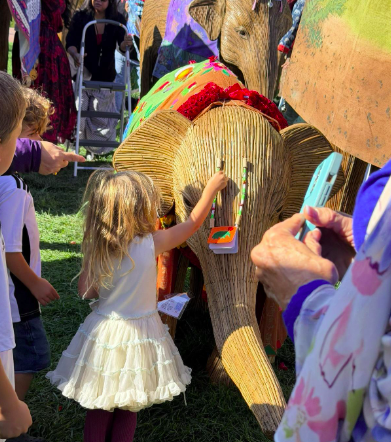
It's a simple moment, but one that speaks volumes.
That child doesn't need to understand the complexities of invasive species, habitat fragmentation, or human-wildlife conflict to experience the wonder of standing before an elephant.
The connection begins with curiosity.
Perhaps she'll ask what the elephant is made from, where real elephants live, or why these sculptures traveled so far to reach her community.
Perhaps those questions will lead to new discoveries.
And perhaps, years from now, that brief encounter will remain one of the experiences that helped shape her appreciation for wildlife.
We may never know.
But as someone who believes deeply in the ability of art to inspire awareness, I find that possibility incredibly meaningful.
Art has a way of reaching people before they even realize there's a message waiting to be discovered.
A Migration Worth Remembering
Looking back on our day at ArtWalk, I find myself appreciating how beautifully these experiences came together.
Our chapter's modestly sized colored pencil artwork, created to support marine conservation, shared the community spotlight with enormous, handcrafted elephants carrying a message of global coexistence.
The scale and materials couldn't have been more different, yet the underlying intentions felt wonderfully connected.
Both invited people to look more closely at the natural world.
Both celebrated the ability of artists to transform inspiration into something tangible.
And both demonstrated that creativity can become a meaningful force for conservation.
For those of us in Northern California, The Great Elephant Migration offers a rare opportunity to experience an extraordinary international art initiative close to home. I encourage anyone who can to visit the exhibition before its December 6 departure, explore the sculptures, and learn about the communities and wildlife that inspired them.
You may arrive expecting to see an impressive collection of elephants.
You may leave thinking a little differently about the world we share.
As for me, I went to Livermore expecting a wonderful day of art and community.
I came home with elephants.
And a renewed appreciation for the unexpected ways art can connect us to one another and to the planet we call home.
A Little Inspiration, A Lot of Possibility
The challenges facing our natural world are real, and the numbers remind us why conservation matters. According to the World Wildlife Fund's 2026 Living Planet Report, monitored wildlife populations declined by an average of 73% between 1970 and 2022. It's a sobering statistic, but the same report offers encouraging examples of wildlife recovery, reminding us that conservation efforts can and do make a difference.
And sometimes, solutions begin in the most unexpected places.
Consider the invasive lantana transformed into these magnificent elephants. By removing a plant that threatens native habitats and giving it a new purpose, the artisans demonstrate how environmental restoration and creativity can work together. Healthy, restored ecosystems can also contribute to climate resilience and the storage of atmospheric carbon in vegetation and soils, a connection recognized by the California Air Resources Board.
Of course, we don't all need to weave an elephant to make a difference! Here in Northern California, we can support habitat restoration, choose native plants for our gardens, participate in local conservation projects, or simply share what we've learned with someone else. The California Invasive Plant Council even provides opportunities to get involved in removing invasive plants and restoring natural landscapes throughout our region.
The challenges may be enormous, but so is our capacity to create positive change. Every restored habitat, every protected species, and every person inspired to care represents another step toward a healthier planet.
So, what small action will you take today?
After all, if an invasive plant can become an elephant, imagine what a little imagination and determination can accomplish!
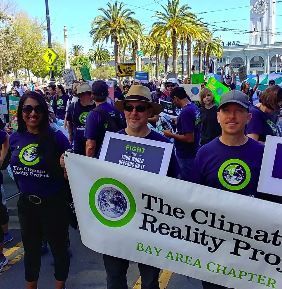
Not already a CRBA member?
Join today!
Help us grow our ranks while you enjoy forging connections with Bay Area students and professionals like you — working together to combat global warming and protect natural resources, biodiversity, and green spaces across the greater SF Bay-Delta Region.
Resources & Further Reading
For readers interested in exploring the exhibition, its environmental mission, and the connections to conservation in Northern California:
The Great Elephant Migration — Explore the international art initiative, its origins, and the conservation message behind the traveling herd.
The Real Elephant Collective — Artists and Creatives — Learn about the Indigenous artisans, individual elephants, and traditional knowledge behind the sculptures.
The Great Elephant Migration — Conservation Impact — Discover how the initiative supports human-wildlife coexistence, Indigenous livelihoods, and habitat restoration.
Three Thirty-Three Arts — Livermore Exhibition — Find exhibition locations, dates, visitor information, and ways to support the local presentation.
Livermore Valley Arts — ArtWalk's 25th Anniversary — Explore the community celebration that coincided with the elephants' arrival.
California Department of Fish and Wildlife — Wildlife Connectivity — Learn how California identifies wildlife movement corridors and addresses barriers to habitat connectivity.
California Department of Fish and Wildlife — Wildlife Connectivity Mapping Tools — Explore California's efforts to identify and address obstacles to wildlife movement.
The Marine Mammal Center — Learn about marine mammal rescue, rehabilitation, research, and conservation in Northern California.
Tri-Valley Conservancy — Discover local efforts to preserve open space, agricultural lands, and natural resources in the Livermore Valley.
WWF — Living Planet Report 2026 — The latest global assessment of monitored wildlife population trends, biodiversity loss, and documented conservation successes.
California Air Resources Board — Natural and Working Lands — Explains how ecosystem restoration, healthy soils, and sustainable land management contribute to climate resilience and carbon storage.